The ownership picture in veterinary medicine has shifted quickly. More than 30% of general veterinary practices are now corporate or private-equity owned, up from roughly 8% a decade ago, according to consolidation reporting from sources such as PrivateEquityVet.org and AAHA. At the same time, somewhere on the order of 15,000 to 20,000 independent practices remain — by AVMA and AAHA estimates, roughly 50 to 70 percent of practices are still independently owned. For an independent owner, that mix is the context for one of the biggest decisions they will make: whether, and how, to sell.
Due diligence has intensified
As more buyers compete and platforms professionalize, the diligence that follows a letter of intent (LOI) has become more rigorous. Post-LOI due diligence digs into the practice's records, and the checklists buyers work from routinely include reviewing the employee handbook and verifying federal and state licensing compliance — including DEA registration and the controlled-substance recordkeeping that goes with it.
What slows a deal at this stage is rarely a single missing document. It is disorganization — files scattered across drives, sign-off that has to be reconstructed from memory, and gaps that surface only when a buyer's advisor goes looking. Every unanswered question adds time and erodes confidence.
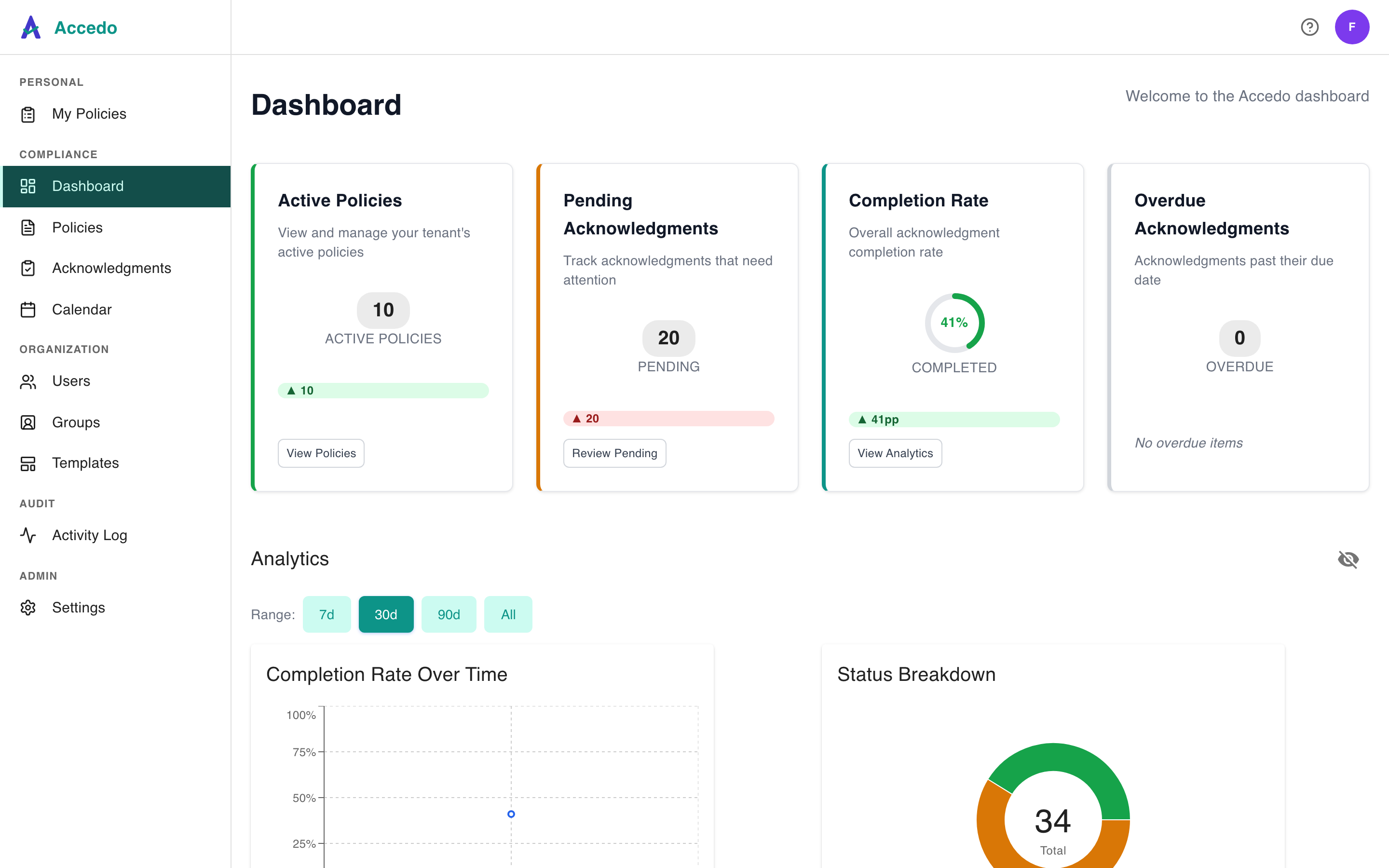
Organized compliance files speed the process
When compliance documentation is organized — the handbook in one place, and clear evidence that staff were trained on and acknowledged the regulated policies — diligence moves faster. A prepared packet signals an operationally tidy practice, answers the buyer's questions before they have to ask twice, and removes a class of friction that otherwise drags out a platform integration. It does not change what the buyer is buying; it changes how smoothly the transaction and the integration that follows it go.
How Accedo helps you get ready
Accedo turns the "did everyone acknowledge this?" question into an organized, exportable answer — the kind of file a diligence team can review without a back-and-forth.
- Publish the regulated policies — controlled-substance procedures, safety plans, the handbook — and auto-assign them to the staff and groups they apply to.
- Collect a dated signature from every signer, so you have evidence staff were trained on and acknowledged each policy, per person and per date.
- Keep it current with recurring re-acknowledgment, so the file stays fresh rather than going stale between the LOI and close.
- Export the audit trail as a clean, timestamped record you can drop straight into a diligence data room.
A buyer is not going to ask for "policy acknowledgment records" by that name. What they want is confidence that the practice is compliant and well-run — and organized, dated evidence that your team acknowledged the policies is one of the cleanest ways to give it to them.